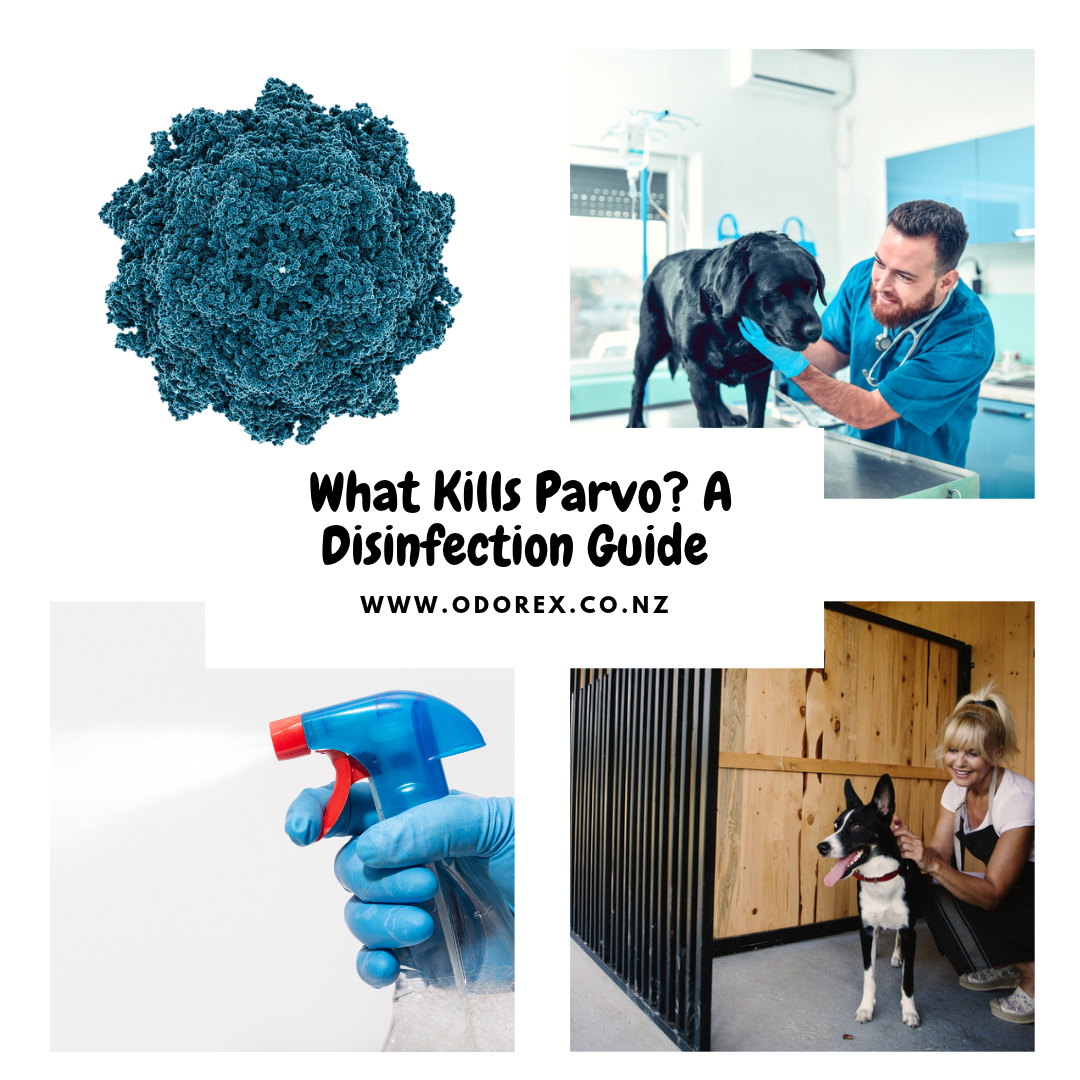
If you run a kennel, cattery, grooming salon or vet clinic, you'll know the sinking feeling when a parvo case turns up. Parvovirus is one of the toughest viruses there is to get rid of, and plenty of everyday cleaners simply don't touch it. Here's a straight-talking guide to what actually works, how to use it properly, and what to look for on a label before you buy.
Why parvo is so hard to kill
Most viruses have a fatty outer coating, which makes them fairly easy to break down with ordinary disinfectants. Parvovirus doesn't. It's a "non-enveloped" virus, so it's much tougher and can survive in the environment for months, even more than a year in organic matter like faeces or dirt.
That means two things:
- Cleaning comes first. No disinfectant works properly through a layer of poo, food or bedding. Remove the mess and wash surfaces with detergent before you disinfect.
- The product and the dilution both matter. A disinfectant that kills kennel cough at its everyday rate may need a much stronger mix, and a longer wait, to deal with parvo.
What to look for on the label
When you're comparing disinfectants for parvo, check the label or data sheet for these three things:
- A stated dilution for parvovirus. "Kills viruses" isn't enough. Look for a specific mix rate for canine parvovirus, and use that rate, not the everyday one.
- A contact time. This is how long the surface has to stay wet for the product to work. It's usually around 10 minutes for parvo, sometimes longer. Wiping it off straight away undoes your good work.
- How it copes with dirt and hard water. Some products lose strength quickly in the presence of organic matter or hard water. Good labels tell you what conditions the product was tested in.
If a product mentions parvo but doesn't give a dilution or contact time, ask the supplier for them before relying on it during an outbreak.
The main types of disinfectant that work on parvo
Bleach (sodium hypochlorite). Household bleach does kill parvo when it's mixed at around 1:30 to 1:32 and left on for 10 minutes. The catch is that it's quickly weakened by dirt, it needs rinsing off, it can damage fabrics and some surfaces, and it's harsh to work with every day. Mixed bleach also loses strength over time, so it needs making up fresh.
Quaternary ammonium compounds ("quats"). This is a big family of veterinary and kennel disinfectants. Some quat formulas are effective on parvo and some aren't, so the label matters. Look for a specific parvo dilution. Quats tend to be gentler on surfaces than bleach and many also clean and deodorise.
Oxidising disinfectants (potassium peroxymonosulfate, such as Virkon S) and accelerated hydrogen peroxide. These are widely used in shelters and farms and are effective against parvo at the right strength. Some come as powders you mix up yourself, and the mixed solution needs replacing regularly.
Whichever type you choose, follow the parvo dilution and contact time exactly. That's where most failures happen.
How our customers use Virulabs Virucide for parvo
Virulabs Virucide Concentrate is the disinfectant we supply for kennels, catteries, vet clinics and breeders. It's a twin-chain quat formula that cleans, disinfects and deodorises in one step, it's neutral pH, and it's MPI approved (C32).
For parvovirus, the manufacturer's directions are:
- Dilution: 1:32 (32ml per litre of water). This is four times stronger than the everyday rate of 1:128.
- Contact time: keep surfaces wet for at least 10 minutes.
To be upfront: Virucide's parvo claim is based on testing against porcine parvovirus, which is structurally very similar to canine parvovirus and is a standard test virus for this purpose. Full details are in the Virucide Product Data Sheet.
Step-by-step parvo clean-up
- Remove all animals, food and bedding from the area.
- Pick up and dispose of all faeces, litter and organic matter.
- Empty feed and water bowls.
- Wash all surfaces with detergent and water, then rinse.
- Apply Virucide at 1:32 so surfaces are thoroughly wet, and leave for at least 10 minutes.
- Wipe or allow to air dry, and ventilate the area.
- Scrub feed and water bowls, troughs and anything that touches food with detergent, then rinse with clean drinking water before reuse.
- Don't put animals back until the treated area is dry.
Unlike some other disinfectants, floors, walls and kennel runs don't need rinsing after Virucide. Only food and water surfaces do.
Other pathogens to plan for
Parvo gets the headlines, but most facilities also need to deal with kennel cough, cat flu, ringworm and more. At its everyday dilution of 1:128, Virucide's data sheet lists efficacy against:
- Bordetella bronchiseptica, a major cause of kennel cough
- Canine distemper virus
- Feline panleukopenia (feline enteritis), the cat version of parvo
- Feline leukaemia virus, feline coronavirus and feline picornavirus
- Trichophyton mentagrophytes, one of the fungi that cause ringworm
At 1:128, one litre of Virucide makes 128 litres of ready-to-use disinfectant, so it's an economical choice for routine biosecurity as well as outbreak clean-ups.
Disinfecting vs everyday odour control
Virucide is for disinfection, and animals need to be out of the area while you apply it. For daily cleaning while animals are around, we recommend Odorex Pet Cleanup Concentrate. It cleans and eliminates urine and kennel odours at the source and is safe to use around pets. Many of our kennel and breeder customers use both, which is why we bundled them together at discount in the Breeder Fresh & Disinfect Kit.
For vets, kennels and other trade customers
Want to see how Virucide compares on cost per litre with other disinfectants used in NZ clinics and kennels? Trade customers can get in touch and we'll send you our cost comparison sheet. And if you have questions about dilutions or setting up a cleaning routine, just ask. We're always happy to help.
Further reading
- Parvovirus: Disinfecting the Environment (Veterinary Information Network)
- Canine Parvovirus Protocol (Maddie's Fund)
- Virulabs Virucide Product Data Sheet
Always read the label and follow the manufacturer's directions. If you suspect parvo, talk to your vet.

Leave a comment
This site is protected by hCaptcha and the hCaptcha Privacy Policy and Terms of Service apply.